



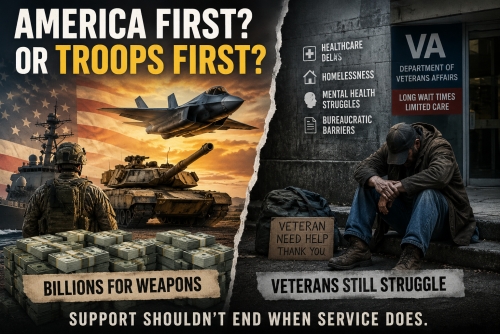
Every election cycle, Americans hear promises about “supporting the troops.” Politicians stand before flags, announce massive military budgets, and frame defense spending as patriotism in action. Recently, supporters of President Donald Trump celebrated a proposed $1.5 trillion military investment, highlighting major troop pay raises, upgraded barracks, and expanded military infrastructure.
At first glance, it sounds like a victory for the men and women who serve. But beneath the headlines lies an uncomfortable question:
If America truly puts troops first, why do so many veterans still struggle once the uniform comes off?
The Difference Between Funding War and Supporting Warriors
There is a major difference between investing in military power and investing in military people.
Washington has never had trouble approving billions — or trillions — for weapons systems, fighter jets, overseas operations, and defense contracts. The United States already spends more on defense than the next several countries combined. Yet many veterans return home to a system that often feels underfunded, overstretched, and forgotten.
Thousands of veterans face:
- Long wait times for healthcare- Rising homelessness- Untreated PTSD and mental health challenges- Difficulty transitioning into civilian careers- High suicide rates- Bureaucratic delays in receiving benefits- For many Americans, this contradiction is impossible to ignore.
Patriotism Should Continue After Service Ends
Supporting troops should not stop at military parades or campaign speeches. Real patriotism means ensuring service members are cared for long after deployment.
A soldier can receive the latest equipment on the battlefield and still return home to inadequate mental health support. A veteran can survive combat abroad only to struggle with housing insecurity at home. These realities expose a gap between political messaging and lived experience.
When politicians celebrate massive military investments, critics argue that too little attention is given to the human cost of war and the long-term needs of veterans.
The Military-Industrial Machine
Critics of large defense budgets often point to the influence of defense contractors and the broader military-industrial complex. Massive military spending creates enormous profits for corporations involved in weapons manufacturing, logistics, and technology.
This raises another difficult question:
Who benefits most from trillion-dollar military budgets — the troops themselves, or the industries surrounding war?
While pay raises and infrastructure improvements matter, many believe veteran care should receive the same urgency and political energy as military expansion.
Troops Deserve More Than Symbolism
“Support the troops” has become one of the safest slogans in American politics. Almost nobody opposes it. But slogans are not enough.
True support means:
Fully funding veteran healthcareExpanding mental health programsReducing veteran homelessnessSimplifying benefits accessCreating stronger career transition pathwaysTreating veterans as national responsibilities, not political propsAmerica’s troops sacrifice years of their lives in service to the country. Many sacrifice their physical and mental well-being. Some never fully recover from the experience of war.
If America can afford trillion-dollar military investments, surely it can afford to fully care for the people who fought under its flag.
Final Thoughts
Military strength and veteran support should not compete with each other. A nation can maintain strong national defense while also prioritizing the long-term welfare of its service members.
But until veterans no longer struggle with homelessness, untreated trauma, or inaccessible healthcare, many Americans will continue asking the same uncomfortable question:
Is “America First” really about troops first — or simply military spending first?



 Agario: The Game That Turns Me Into a Competitive Monster for No Reason