


Four years after Ricky Gervais’ Netflix special SuperNature became the number one comedy special in the world, people are still debating why it resonated so strongly with audiences.
The answer may have less to do with jokes — and more to do with culture.
In an era where many people feel mainstream media, celebrities, and public institutions carefully filter what can and cannot be said, comedians like Ricky Gervais have become unlikely symbols of blunt honesty. Whether people agree with him or not, many viewers saw SuperNature as something increasingly rare in modern entertainment: someone speaking without fear.
Comedy Used to Be About Breaking Boundaries
For decades, comedy has pushed against social norms. The greatest comedians often challenged religion, politics, celebrity culture, and public hypocrisy.
George Carlin mocked political language.
Dave Chappelle challenged identity politics.
Chris Rock dissected race and media narratives.
Ricky Gervais turned his focus toward modern outrage culture and censorship.
The role of comedy has never been to make everyone comfortable. In fact, discomfort is often the point.
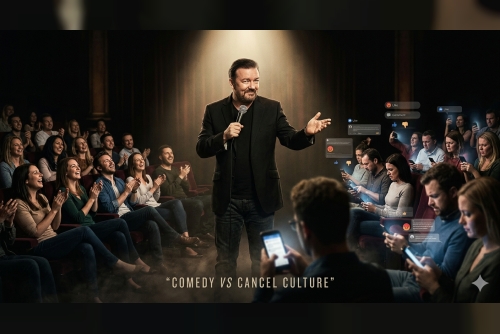
But today, comedy exists in a cultural environment where backlash spreads instantly online. A joke can trigger viral outrage within minutes, creating pressure from social media campaigns, news coverage, and corporate sponsors.
That environment has changed entertainment completely.
Why “SuperNature” Connected With So Many People
When SuperNature launched, critics accused Gervais of being offensive, insensitive, or provocative for attention.
But millions of viewers interpreted the special differently.
To supporters, Gervais represented resistance to a culture increasingly obsessed with policing language, humor, and opinion. They viewed him as someone willing to say publicly what many privately think.
That explains why the special became a global success despite heavy criticism.
People were not just reacting to comedy.
They were reacting to the feeling that open conversation itself was becoming restricted.
The Rise of Fear in Public Conversation
Modern public discourse often operates under an invisible rule:
Say the wrong thing, and you risk social punishment.
That punishment may not come from governments. Instead, it comes from:
- Online outrage mobs- Career consequences- Public shaming- Deplatforming campaigns- Corporate pressure- Algorithmic suppressionAs a result, many people self-censor long before anyone explicitly tells them to stay quiet.
Comedy disrupts that fear.
A comedian on stage can expose contradictions, mock sacred ideas, and question cultural trends in ways that journalists, politicians, and corporations often avoid.
That is why comedians increasingly occupy a strange role in society:
They are becoming cultural pressure valves.
Comedy as the Last Honest Space
This does not mean every joke is brilliant or beyond criticism. Some jokes fail. Some cross lines. Some deserve backlash.
But many people now believe comedy remains one of the few spaces where honesty still survives.
The popularity of SuperNature suggests audiences are hungry for unscripted expression in a world dominated by carefully managed narratives.
Ironically, attempts to silence controversial comedians often make them even more popular. Outrage becomes free marketing. Criticism turns comedians into anti-establishment figures.
The more institutions try to control speech, the more audiences reward people who ignore the rules.
The Bigger Cultural Question
The debate surrounding Ricky Gervais is not really about one comedian.
It is about a larger question:
Can society tolerate uncomfortable speech without trying to destroy the speaker?
Some argue modern culture has become more compassionate and socially aware.
Others believe it has become fragile, intolerant, and authoritarian in new ways.
The tension between those two perspectives defines much of modern internet culture.
And comedians are standing directly in the middle of it.
Final Thoughts
Ricky Gervais’ SuperNature succeeded because it tapped into something much larger than comedy.
It reflected growing frustration with censorship, performative outrage, and cultural gatekeeping.
Whether people loved the special or hated it, its popularity proved one thing:
Millions of people still crave authenticity — especially when it makes them uncomfortable.
That may be why comedians today feel more influential than many journalists, celebrities, or political commentators.
They are saying the things everyone else is too careful to say.



 Meilleur casino en ligne fiable : le comparatif des top sites de jeux d'argent en France en 2026