


 The Beijing Summit: A High-Stakes Reboot of the Global Supply Chain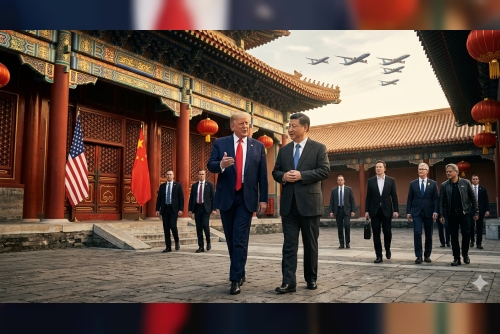
In the first U.S. presidential state visit to China since 2017, the world’s two largest economies have entered a critical phase of geopolitical recalibration. The two-day summit in Beijing between President Donald Trump and President Xi Jinping was more than just a diplomatic ceremony; it was a high-velocity negotiation aimed at patching the "bugs" in the global "human architecture."
The "200-Jet" Strategic Calculation
The headline of the summit remains the massive agreement for China to purchase 200 Boeing jets. While this "commitment for 200 big ones" exceeded Boeing's initial ask of 150, it landed below some Wall Street expectations of 500, causing a brief flicker of friction in the markets.
Beyond aviation, the deal extends to vital resources:
Energy Infrastructure: Significant increases in Chinese purchases of U.S. oil and LNG.
Agricultural Scalability: A surge in soybean exports to stabilize the American farming "operating system."
Economic Logic: Trump described the meeting as "very good," signaling a "security-first" posture aimed at reducing trade deficits while maintaining global stability.
Tech Innovators at the Great Hall
Perhaps the most notable "system update" was the presence of a "Who's Who" of tech innovators. Executives like Elon Musk, Tim Cook, and Jensen Huang were introduced to Xi one-by-one, highlighting the transition from purely military strategy to cultural and technological identity. Xi’s message to the delegation was clear: China’s door will "open wider" for American businesses, fostering a "version 2.0" of bilateral cooperation.
Friction and Standoffs: The "Security Threshold"
Despite the diplomatic progress, the summit wasn't without its logistical "bugs." A tense standoff occurred between Secret Service agents and Chinese security at the Temple of Heaven, alongside reports of a White House aide being "trampled" during a chaotic press rush. These incidents serve as a reminder of the systemic risk and "denial of threshold" that still exists within the international relations "code."
The Bottom Line
We are at a crossroads where high-stakes diplomacy meets the lived reality of global commerce. As Trump invites Xi to the White House for a follow-up in September, the goal remains: stabilize the global flow of resources while doubling down on the competitive values that make our systems worth defending.