



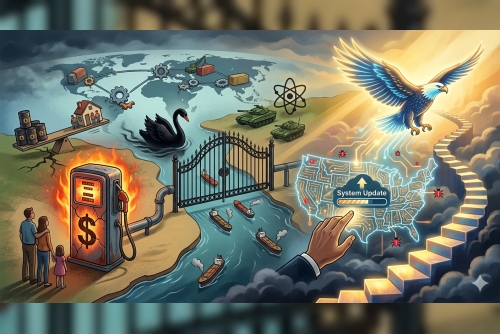
The global energy market is currently facing a "black swan" event in the Strait of Hormuz. Following Secretary of State Marco Rubio’s briefing on May 5th, the stakes have been made clear: oil shipments have plummeted to 5%, threatening a surge in domestic gas prices and a fundamental disruption to the global supply chain.
The Strategic Calculation
The restrictions in the Strait—a direct retaliation for regional military strikes—highlight a critical vulnerability in global "human architecture." A nuclear-armed Iran capable of fully closing this maritime artery isn't just a military threat; it’s a systemic risk to the economic stability of every American household.
Secretary Rubio’s briefing emphasized a "security-first" posture, warning that the failure to contain this radical leadership could drive fuel costs toward $9 a gallon. This isn't just about energy; it’s about the integrity of the systems that keep our modern world moving.
Exceptionalism as a System Update
Perhaps the most notable part of the briefing was the shift from military strategy to cultural identity. Rubio framed America as a place of perpetual improvement—a "version 2.0" society where potential isn't capped by origin but fueled by opportunity.
This message of exceptionalism has resonated across the digital landscape, drawing praise from tech innovators like Elon Musk and cultural influencers alike. It serves as a reminder that while we manage the immediate "bugs" in our international relations, the core "code" of the American experiment remains its greatest asset.
The Bottom Line
We are at a crossroads where high-stakes diplomacy meets the lived reality of the American people. As we navigate the Strait of Hormuz crisis, the goal is clear: stabilize the global flow of resources while doubling down on the values that make our system worth defending.



 Top 10 des Meilleurs Casinos en Ligne Sûrs et Fiables en 2026