



Did you know that the "visible" internet most of us use daily accounts for only a tiny fraction of the total data available online? The rest exists in layers that standard browsers cannot reach, often hidden behind encryption to protect user identity. Exploring these areas requires specific tools and a different mindset regarding digital footprints. If you are curious about how to navigate these quiet corners of the web, understanding the specialized tools available is the first step toward a safer experience.
You might feel a bit lost when you first open a privacy focused browser because there is no welcoming "home page" or giant search bar waiting for you. Compared to the traditional web, where massive corporations index every move you make, this space is fragmented by design. Finding information here is less about clicking the first result and more about knowing which directories are reliable. It is a world where privacy is the default setting, which makes the role of a search engine both more difficult and more important.
Understanding the Basics of the Tor Network
The Tor network is a group of volunteer operated servers that allows people to improve their privacy and security on the Internet. When you use this system, your traffic moves through three different layers of encryption before it reaches its destination - this "onion routing" ensures that no single point in the chain knows both where the data came from and where it is going. It is a powerful way to stay anonymous but it also means the web looks very different than what you are used to seeing.
Because the network prioritizes secrecy, many websites do not stay active for long and they often use long strings of random characters for their addresses. You cannot simply guess a URL here. If you want to get started, a background on privacy tools can help you understand why the technical hurdles exist. Once you grasp the mechanics of the layers, the logic behind the specialized search tools becomes much clearer.
How Searching Differs on the Dark Web
Standard search engines like Google or Bing work by "crawling" the web, which means they follow links from one page to another to build a massive map. On the Tor network, this is much harder because many site owners specifically block crawlers to maintain their privacy. Search results are often incomplete or outdated. You are not looking at a live map of the entire network - you are looking at what a specific engine managed to find before the site changed its address.
Working with these tools requires patience - You will notice that loading times are slower because your request is bouncing around the globe to keep you hidden. You won't find personalized results based on your past behavior. The engine doesn't know who you are, which is exactly the point - this creates a "raw" search experience where you see exactly what the database contains, without any filters or biased algorithms trying to sell you products.
Notable Search Engines for Beginners
While there are many small projects, a few names have become staples for people who value their anonymity - these engines try to index ".onion" domains so you don't have to hunt for links manually. Some focus on being as "clean" as possible, filtering out dangerous or illegal content, while others are more open and act as raw directories. Choosing the right one depends on what you are looking for and how much filtering you prefer.
DuckDuckGo (Onion Version)This is a familiar face for many. While it mostly searches the regular web, its onion site allows you to perform searches without leaving the encrypted network. Torch
One of the oldest engines in the space - It has a massive index but does not filter results - you must be careful about what you click. Haystak
A modern engine that claims to index over a billion pages. It offers a more "premium" feel with advanced search features.
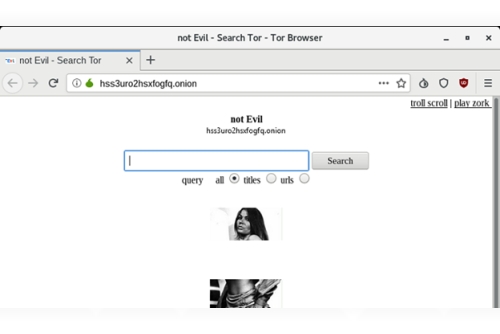
If you are looking for a tool that balances usability with a focused index, an overview of Tor network systems like Not Evil can be a great starting point - this specific engine avoids advertising and trackers, staying true to the original goals of the anonymous web. It is built to be a simple, functional gateway for those who are tired of being watched while they browse.
Staying Secure While You Explore
Safety is your own responsibility when you move away from the regulated parts of the internet. Because there is no central authority to report "bad" websites to, you must be your own gatekeeper. Never download files from a source you do not recognize and keep your browser window at its default size to prevent "browser fingerprinting" These small habits are the difference between a successful trip and a compromised device.
Always keep your software updated to the latest version to patch security holes. Do not use your real name, email or any identifying handles on these sites. Disable JavaScript if you want the highest level of security, though some sites may stop working.The Evolution of Private Web Access
The demand for private searching is growing as individuals become more aware of how much data tech companies collect. We are seeing a shift where even "regular" internet users are starting to use tools once reserved for activists and cybersecurity experts - this tells us that the future of the web might be more decentralized. Search engines that respect user boundaries are becoming the gold standard for anyone who thinks their data belongs to them, not to a corporation.
As you continue your journey, remember that the tools are just a means to an end. If you are researching sensitive topics, bypassing censorship or just exploring the technology, the goal is always the same - regaining control over your digital life. The Tor network is a vast, quiet library and search engines are the index cards that help you find the right shelf. Use them wisely, stay curious and always prioritize your digital safety above all else.
FAQ
Is it illegal to use the Tor browser?
In most democratic countries, using the browser is perfectly legal. It is a tool for privacy used by journalists, law enforcement and everyday citizens. What you do while using the tool must still follow the laws of your jurisdiction.
Why are onion links so slow to load?
The speed is slower because your data is wrapped in multiple layers of encryption and sent through three different volunteer nodes across the world - this extra distance and the process of encrypting/decrypting at each stop take more time than a direct connection.
Can I use Google on the Tor network?
You can but it is not recommended - Google often blocks requests from the network or forces you to solve many "captchas" because it sees the connection as suspicious. Using privacy focused engines is a much smoother experience.
Do I need a VPN to use these search engines?
While some people use a VPN for extra security, the Tor browser is designed to work on its own. Using both can sometimes make your connection even slower or, if configured incorrectly, actually make you easier to track.



 Meilleur casino en ligne fiable : le comparatif des top sites de jeux d'argent en France en 2026